Former UN Deputy Secretary-General · Author · Speaker
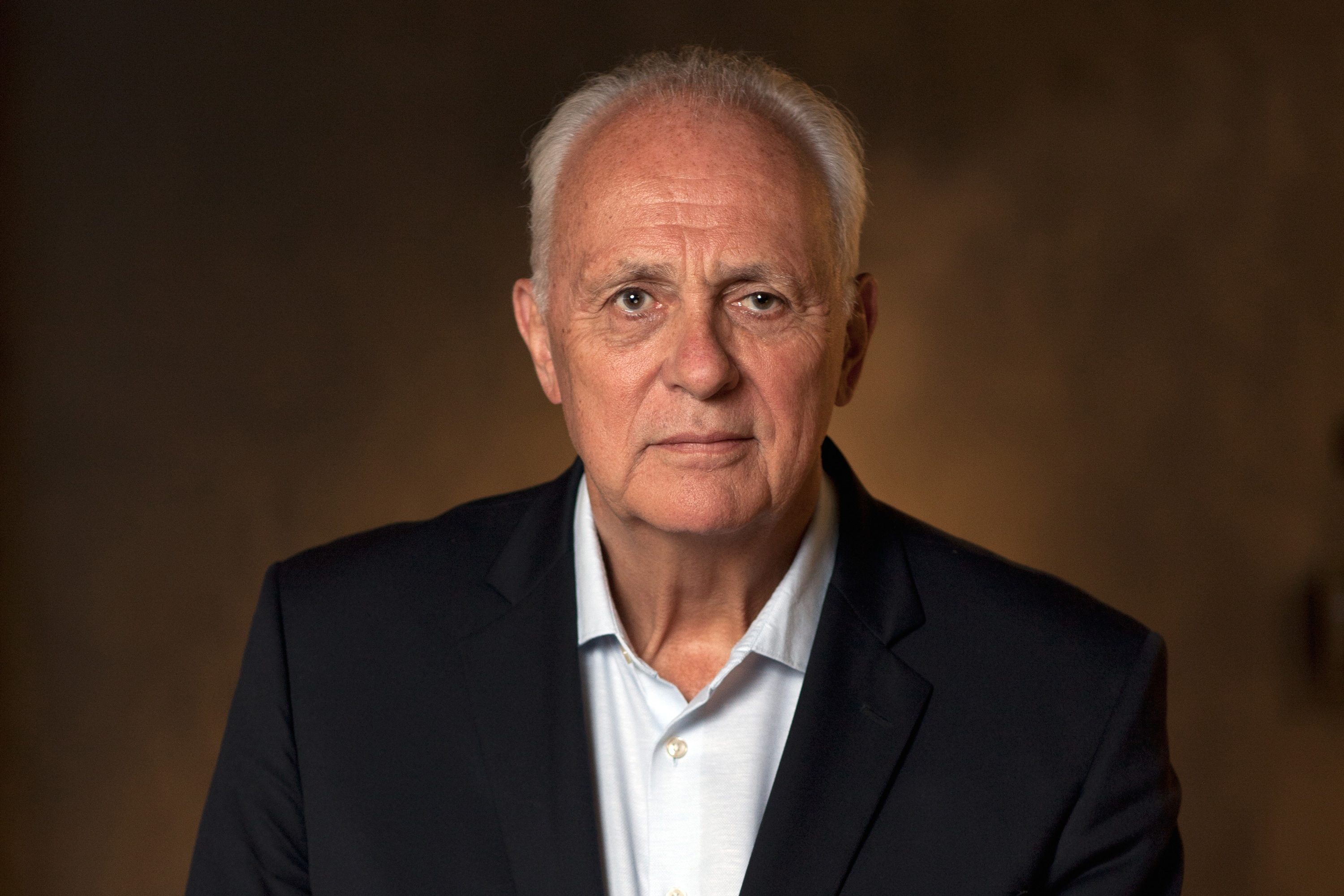
Mark Malloch-Brown
Inside the Forces Reshaping Our World
Mark Malloch-Brown has spent four decades at the pinnacle of international affairs — as Kofi Annan's deputy at the UN, head of the UN Development Programme, President of Open Society Foundations, and UK minister. He is one of the most compelling speakers available on the geopolitical and economic forces transforming our world.
Speaking Topics
What Mark Speaks About
Geopolitics & the Changing Global Order
From the fall of the Berlin Wall to the rise of Trump — charting the implosion of the post-war order and where the world goes next.
Global Governance, Technology & Institutions
How AI and emerging technologies are transforming not just economies, but the very processes by which the world governs itself.
Geoeconomics & the Future of Development
The IMF, World Bank, and global development finance at 80 — why the institutions that built prosperity must now be reimagined.
Inside Stories from Global Leadership
Four decades beside Kofi Annan, George Soros, and Gordon Brown — personal accounts from the rooms where history was made.
Topic Briefs
In Depth
We are living through disruption. Not for the first time an old order is broken and the new has not emerged. Mark reaches back through his own years on the global frontlines as well as his perceptive reading of twentieth century history to chart the implosion of the world created by the two Western victories of 1945 and 1989. He recalls first hand his times in Moscow and the Balkans after the fall of the Berlin Wall. Today that euphoria is a distant memory.
This sets up the central question of where the world is headed. As China becomes the world's leading trading nation, and countries such as Brazil and India assert both a new regional dominance and lay claim to a global voice, he sees an earlier more benign reordering of the world being overtaken by a new more contested and malignant power shift as the US digs in its heels. He explains the rise of Donald Trump as a consequence of relative American weakness not strength — a phenomenon at its core of a white working class America feeling the pinch of lost jobs and status.
He spells out what this may mean for the world of rules and institutions set up in 1945 and encapsulated in the UN Charter. Will the UN survive and what are the chances of restoring respect for international law? Are we reverting to a nineteenth century world of state power and interests prevailing over the norms painfully established after two world wars? We have already reverted to much higher levels of conflict than we have seen in decades.
And what are the implications for an apparently weakened Europe, or for the Gulf, or for Africa undergoing dizzying demographic change? Anticipate a sweeping global tour of these issues and their interplay — resting on a lifetime of professional and personal insight.
Explore this topic →Regulation is the first idea that crosses minds when technology and global governance are joined. Having been at the top of the United Nations during efforts to regulate the internet, Mark describes the mixture of governmental motives — some intended to protect freedom, others to suppress it — that are at play in debates about the global regulation of technology and information.
Yet as important as how we set global standards for AI is its direct impact on how we govern ourselves. The very processes of international governance, development and security are going to be transformed. At its humblest, the laborious reporting and measuring of global conditions that forms so much of the UN's day-to-day work will be changed by AI. At the more strategic heights, whole models of how countries develop and modernise will be upended as AI displaces human work — with consequences for political stability that confound early predictions.
Twenty-five years ago on a stage in Seattle, Mark and Bill Gates debated the likely impact of computers on African development. Strangely, Mark championed them but Gates thought they were a distraction. Both were arguably wrong — the cellphone was the real agent of change. He brings that same humility and sense of surprise to forecasting what AI will actually mean.
And at its most threatening, technology is changing security. Drones are undermining old powers and may be on the verge of empowering non-state actors the world over. As someone who has served the UN in war zones and been an architect of the international system's most ambitious development initiatives, his account of how technology will impact the world has the authenticity of deep experience — and the modesty of someone who has never stopped being surprised.
Explore this topic →The institutions that have governed the global economy since 1945 — the IMF, the World Bank, and the broader architecture of development finance — were built for a world that no longer exists. As an External Advisor to the Bretton Woods at 80 Initiative, and as former head of the UN Development Programme, Mark brings both insider knowledge and reformist conviction to questions about how these institutions must evolve.
He charts the central tension: economic systems are more globally integrated than ever, yet that integration has not prevented rising conflict, inequality, or nationalist backlash. The institutions meant to hold the line are struggling with a crisis of relevance in a multipolar world where the Global South demands a genuine voice.
Drawing on his years leading UNDP — the world's largest multilateral development network — and his recent work examining the future of the Bretton Woods system, Mark offers both diagnosis and prescription. What would truly reformed global economic institutions look like? How do you finance development in an era of climate emergency and AI disruption? And how do you build political will for multilateral solutions at a moment when every major power is retreating inward?
His answers are those of a practitioner who has run these institutions, seen their failures up close, and still believes that with the right reforms, they remain the world's best chance for shared prosperity.
Explore this topic →Mark spent his career on the world's frontlines, beginning as a journalist covering both the rise of Margaret Thatcher and later global issues, then as a humanitarian leading UN field operations across the world's trouble spots, before an extraordinary decade spent as a political consultant at the side of new democratic leaders battling authoritarians for power from Latin America to Russia and the Philippines.
These experiences set him up for his years at the top of the international system — at the elbow of individuals like Kofi Annan, the UN Secretary General, George Soros, and British Prime Minister Gordon Brown. He ran the UN Development Programme before becoming Annan's top deputy, then was President of Open Society Foundations, and a minister covering Africa, Asia and the international system in the Brown government.
Even as a participant he never lost the detached eye of the journalist. His memoir, The Unfinished Global Revolution, combines insights into the possibilities and shortcomings of international co-operation passed through the filter of personal biography. He is now a principal in a shortly-launching AI large language model-integrated platform that, paired with a panel of leading experts, seeks to identify corporate risk through continuously scanning a range and depth of global data that no human team alone could effectively sustain.
Whether motivating a corporate audience or entertaining an after-dinner one, his mix of reminiscence, humour and insight is uniquely compelling.
Explore this topic →What Organisers Say
“Your remarks brought real depth and perspective to the Forum, and we received positive feedback from participants on your session. It was a highly engaging two days with senior transformation leaders from across the region, and your contribution was a real highlight.”
“Thank you for your presence and this sweeping overview of where our world stands. It triggered rich discussions at every table.”
Watch
Mark in Conversation
Speaking Engagements
Invite Mark to Speak
Mark brings decades of frontline experience in global governance, development finance, and international diplomacy to every engagement. He speaks to audiences ranging from the World Economic Forum to corporate boards, universities, and civil society organisations.
Contact: andrew@speakingoffice.com